This is the latest piece in the series where I opened with the switchboard era article, the case that clinical trials still run on wiring from another time and AI thrown on top of it doesn’t fix it. Then I made the case that clinical trials run on Formula 1 economics. In that article I drew a parallel between F1 and NASCAR and how the analogy turns into what patients deserve. They deserve a car that has been built before. After some reflection I had to publish a part two of the car installment. And in my last article I talked about the kind of crew patients deserve.
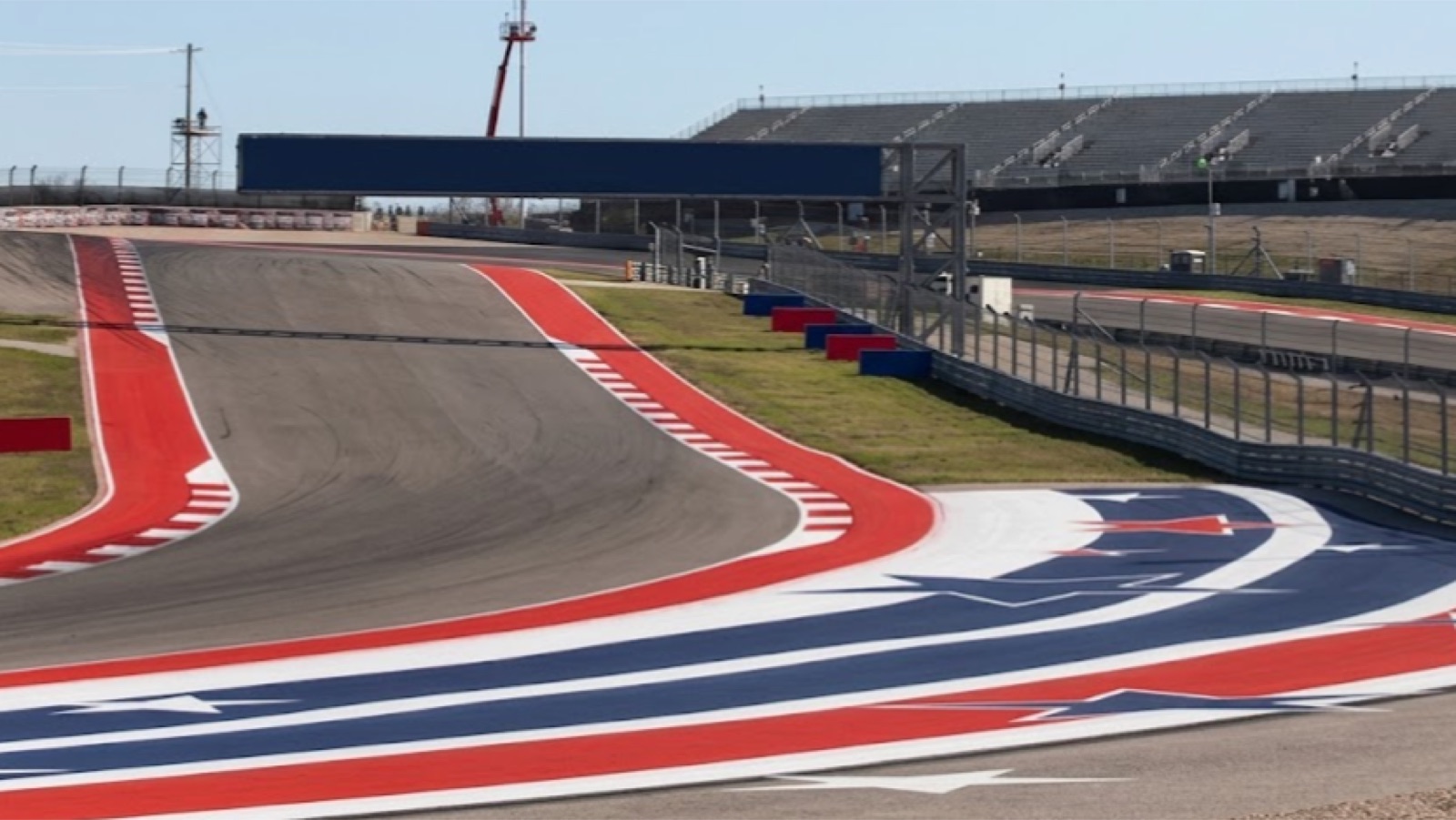
This article is about the track.
If you watch a race pit crew work, imagine that at every race the tools are different. A different wrench. A different set of lug nuts. A gas can that fits nothing they trained on. The muscle memory is gone before the green flag.
Now imagine the race track itself moves. The driver rehearsed this circuit for weeks, every apex, every braking point. On race day, track officials drop a chicane into the middle of the back straight. Every lap the car driver visualized is now wrong.
This is not a thought experiment.
This is the day in the life of a clinical research coordinator. New systems, new forms, new rules, a course that changes after the preparation is done.
The patient does not care about any of it. Not the wrench, not the chicane, not the rules. Not until a process error they had no part in excludes them out of the one trial they were literally dying to stay in.
They deserve a track that has been raced before. This is a course the crew already knows. This means a regulator that’s on the same page as the sponsor. A path that leads somewhere predictable.
A known track is not a track without rules. It is a track whose rules hold still long enough to prepare against. The sponsor can rehearse the submission. The site can build a process once and run it many times. The regulator can recognize what arrives because the shape is familiar. None of that is about cutting corners. It is about whether the work a team does in advance still counts on the day it matters.
Here is the part most people outside the room get wrong. They picture the regulator as the obstacle, the one who slows everything down on purpose.
In a recent FDA/MHRA/Health Canada symposium, regulators describe frustration with the industry’s focus on checking boxes and following processes, like Gilinda in Wicked instead of applying critical reasoning and a culture of quality ala Elphaba. - Nechama Katan
And here is the harder irony. In this industry, the people who make the track harder are often not the regulators at all. Non-regulatory teams assume a requirement that was never written, then build to the phantom. Whole processes get constructed to satisfy a rule no one at the agency ever made. A track raced before is partly a track cleared of those myths, where everyone can tell the real turns from the imagined ones.
The people building that clarity are already at work. Most have been at it for years. None are chasing speed for its own sake. They are after something harder and more useful, a path that is practical, predictable, and built to last.
Sean Khozin spent years at the FDA, where he helped found the Oncology Center of Excellence and ran the agency's first data science incubator. He now leads the CEO Roundtable on Cancer and Project Data Sphere and has bee writing some great articles in his PhyusionBio Substack. His argument is simple and radical. Evidence should reach a regulator as a continuous signal, not a frozen dossier reviewed long after the fact. In a disease like pancreatic cancer, where second-line survival is counted in single-digit months, the lag between knowing something and acting on it is paid in lives. The FDA's real-time clinical trials initiative, with its first proof-of-concept studies already reporting to the agency as they run, is his thesis moving from argument into practice.
Tala Fakhouri wrote the rules that let a real-time track be read safely. At the FDA she led the first draft AI guidance for drug development and the agency's first guidance on real-world evidence. Her message has never been that AI should run the show. It is the opposite, human-in-the-lead, with the technology doing the repetitive work so experts can judge. She spent her FDA years clearing the myths that make people fear the regulator, explaining that the agency cares less about whether a model is explainable than whether it is trustworthy, and is not in the business of banning generative AI. I met Tala in 2024 at the Innovation Gathering Network where she spoke on Where Artificial Intelligence and Regulation Meet, you should watch this. She is now at Parexel, making the same case from the industry side of the table.
Non-regulatory teams assume a requirement that was never written, then build to the phantom.
I recently met Francisco Nogueira and he is building the surface where the two sides meet. A former regulatory leader at Roche, he is the founding CEO of Accumulus Technologies, a platform that began as a non-profit (Accumulus Synergy) funded by ten competing pharmaceutical companies so that sponsors and health authorities could exchange data in real time. Continuous review needs continuous exchange, and an industry that ships sealed packages back and forth cannot hold a conversation. Accumulus Technologies is the attempt to make that exchange a shared, standing thing rather than a sequence of envelopes.
Nechama Katan (who helped me with this article) works on the part everyone dreads and almost no one loves, the audit trail. Through her firm, Wicked Problem Wizards, she helps teams treat the audit trail not as a dead log to be reconstructed under pressure, but as a live risk-management tool, the thing that shows where a trial is straining before it breaks. The audit trail directly measure site and patient behaviors enabling process control which is at the heart of RBQM and the modernized Good Clinical Practice guideline, ICH E6(R3). R3 demands oversight proportionate to risk rather than uniform and exhausting, a move from check boxing to a culture of critical reasoning. Done her way, the record stops being a tax and becomes an instrument.
None of these four are work together. One is rethinking how evidence moves. One wrote rules for the tools. One is building the pipe between the sides. One is turning oversight into insight. They share a track and a direction and almost nothing else. Each is laying one stretch of road, perhaps unaware of the others laying theirs.
Now picture that track finished. The sponsor arrives with a study the regulator already recognizes, run on tools whose rules did not move overnight. Signals reach the agency as they emerge, so a result that would have waited two quarters for review is seen in weeks (This is what Sean wrote about in his last article). The audit trail is not a frantic reconstruction but a running readout of quality. And the patient, the one strapped in for a race they did not design, is not shut out by a clerical error or left dying while the paperwork catches up to the science. The track knows them when they arrive.
That is not a fantasy. Every piece of it exists somewhere already. What is missing is the connection.
Getting there asks for several things at once. It asks regulators and sponsors to share a standing surface instead of trading sealed files. It asks for clear, public rules on AI, so trust does not have to be rebuilt from scratch in every submission. It asks for oversight that is proportionate, driven by analytics rather than ritual. And it asks the whole field to stop building to phantom requirements and agree on the real ones.
One of those agreements is being written right now, in the open. The FDA's request for information on real-time clinical trials, docket FDA-2026-N-4390, is taking public comment through the end of June. That is the rare moment when the shape of the track is up for input rather than handed down. I filed a response, and I would rather the record carry many voices than mine alone. If you have run on this track, you know something the agency needs to hear.
The patient is still on the track. A course they can count on is a real piece of what they are owed. It is not the whole race. A track raced before still leaves the question of time, of how many turns there are and how long each one takes, or why a finish line that should be close stays so far away.
That is the next piece.
About the author
Bo Lora spent four years at AWS deeply embedded across more than thirty roles in the clinical research value chain, from sites to sponsors, CROs, tech vendors, start-ups, and regulators. He held Core Technical Field Community Leadership in Health and Life Sciences. Before that he was a consultant at BearingPoint, working across finance, telecommunications, manufacturing, and semiconductors. He started his career as a BBN Field Engineer in Stuttgart in 1989, where he once flew to Oslo to fix a modem that was unplugged.
He is active in CDISC, Vulcan, and TransCelerate, and serves as AI Faculty for ValueAdd Group.