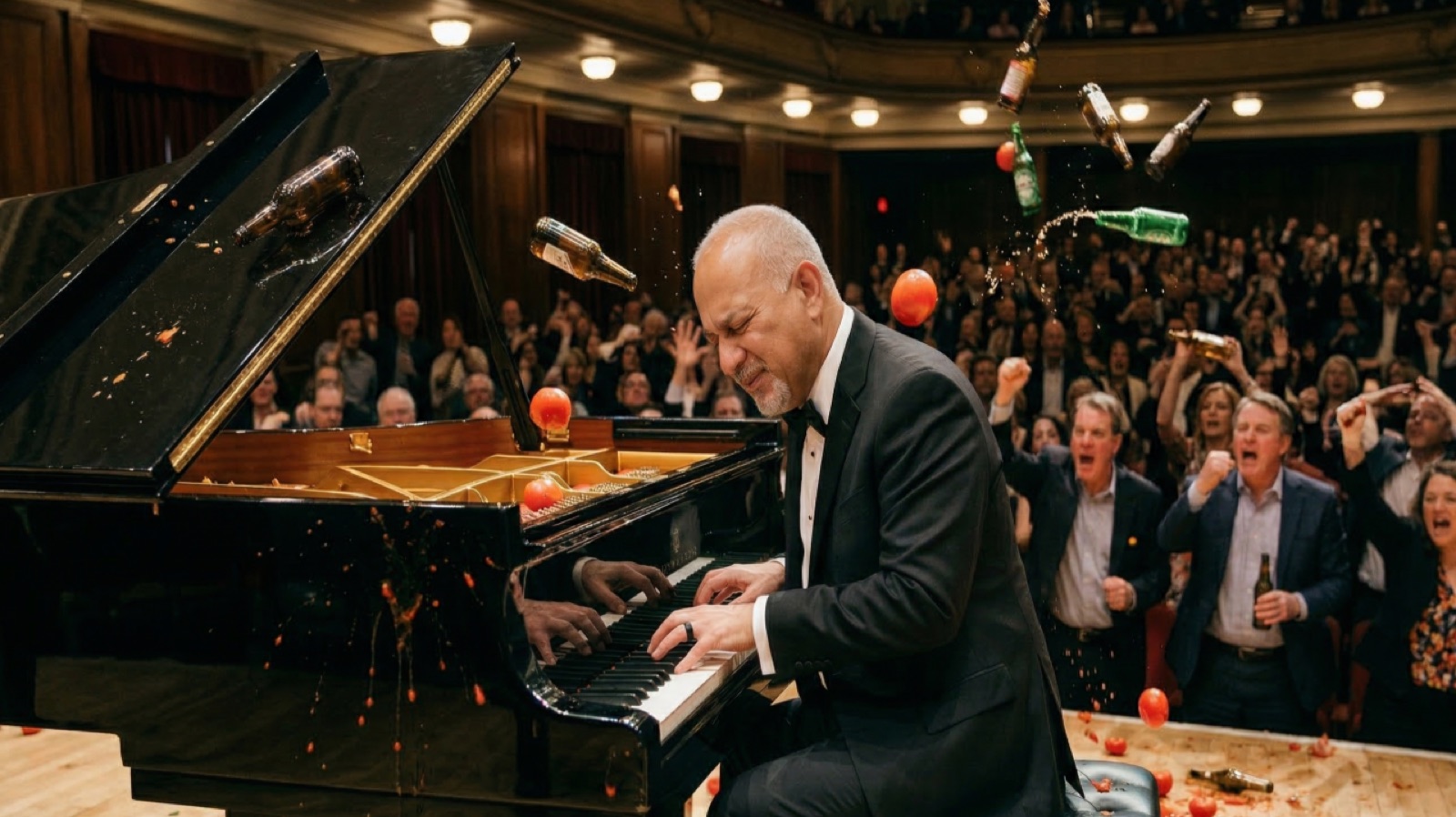
The hero image is jarring: That's me in a tuxedo sitting at a grand piano in a prestigious concert hall. I'm leaning into the keys with the intensity of a virtuoso, but the air is filled with flying tomatoes and half-empty beer bottles. I feel like Mozart, but the audience is reacting to a catastrophe.
Years ago, when I lived in San Antonio, I was captivated by a specific brand of digital alchemy. I had this recurring dream of walking into a high-end restaurant or a crowded shopping mall, sitting down at a piano, and effortlessly rendering Vivaldi’s Four Seasons. I imagined the collective gasp of the room, the dropped jaws, the sheer amazement of an audience witnessing a master at work. The imagery was so alluring that three decades ago, I walked into a piano store and wrote a check for $7,000 to bring a beautiful, top-of-the-line Yamaha electronic keyboard home.
In my mind, that check was a shortcut to mastery.
There were nights I would lose myself in that instrument. I would press buttons, layer tracks, and trigger sophisticated arrangements. In the private theater of my own mind, I was Mozart reborn. I felt the music (I felt the power of the composition) but there was a stark, humbling reality beneath the cacophony of sounds. If a single trained musician had been standing in that room, they would have wanted to throw the piano (and perhaps me) out the window. To the world, I was producing noise. To me, because I held the tool, I felt like a genius.
This is the EXACT "alignment gap" we are witnessing today with Artificial Intelligence.
The transition from that living room in San Antonio to the sterile precision of a laboratory is where the analogy becomes a warning. In my house, the "noise" I produced was harmless (save for the ears of my family). But in healthcare and life sciences, the stakes of playing without mastery are measured in human lives and decades of lost research.
When we talk about the "music" of this industry, we are talking about something far more rigorous than just digital logic or data flows. Those are merely the acoustics of the room. The actual performance is composed of biochemical engineering, device physics, and the uncompromising standards of Good Manufacturing Practice (GMP). But the symphony doesn't end in the lab. It extends directly onto the front lines of healthcare delivery.
It is carried out by the clinicians making split-second diagnostic decisions and the clinical research coordinators who manage the delicate, high-stakes choreography of a human trial. This is the realm of atoms, molecules, and human lives, where "hallucinations" aren't just software bugs (they are toxic interactions, failed delivery systems, or a misinformed treatment plan for a patient who has run out of options).
The allure of AI in 2026 is that it feels like a shortcut. I see executive suites writing the modern equivalent of that $7,000 check, hoping they can bypass the grueling, decade-long slog of scientific validation. They want to "tickle the keys" of a generative model and have it perfectly render a protein folding sequence or a regulatory submission. They want the Vivaldi output without having to build the violin.
But science is not a digital simulation; it is a brutal, beautiful reality.
If an AI suggests a molecular binder that cannot be synthesized in a physical lab, or a dosage rhythm that ignores the chaotic variables of human metabolism, the "music" fails the moment it meets a patient. In this concert hall, when the performance is off-key, we don't just see tomatoes and beer bottles flying. We see clinical trials that stall, innovations that never reach the bedside, and time (the one resource a stage-four cancer patient doesn't have) wasted on a digital delusion. STOP RIGHT HERE and re-read this paragraph again!
We must pivot our discipline to recognize that AI is not a replacement for the "Beethovens" of the lab, the manufacturing floor, or the clinic. A true practitioner uses AI as a cognitive exoskeleton. They don't use it to hide a lack of expertise; they use it to amplify the precision of their craft. The tool allows the clinician or the engineer to move faster and see patterns in genomic or phenotypic noise that were previously invisible, but the "music" still depends on their deep, fundamental understanding of the science.
The real world is waiting for a virtuoso.
This leads us to the most dangerous trap of 2026: the belief that AI can satisfy the deficiency of our weaknesses.
If you know me and have been around me, you have heard me say this: I do not like working on my weaknesses. I don't believe in the slow, agonizing crawl of incremental improvement in areas where I lack natural talent. Instead, I lean into my strengths and I use tools to fortify them. This is the only honest way to use the "Yamaha." You use the keyboard to make your masterpiece louder and more precise; you don't use it to pretend you know how to write a song when your mind is silent.
AI is a cognitive exoskeleton designed to make your personal moat deeper and your unique strengths unassailable. It is not a prosthetic for a missing skill set. If you are a brilliant biochemical engineer, AI will make you a visionary. If you are a disorganized thinker, AI will simply help you produce chaos at a higher velocity. We must reject the delusion that this technology can transform a fundamental weakness into a sudden, sustainable strength.
This leads to two urgent appeals as we stand on this stage.
To the individual: Stop trying to use AI to "fix" yourself. If you are using these tools to cover up a lack of discipline or a lack of fundamental knowledge, you are participating in a digital charade that will eventually be exposed when the "music" has to perform in the real world. Instead, use AI to double down on what you already do better than anyone else. Use it to automate the friction, to clear the path for your genius, and to amplify your specific contribution to the world. Fortify your strengths and let the world see the virtuoso you actually are.
To the leadership writing the checks (whether it’s $7,000 or $7,000,000): I offer this with the utmost respect for the weight of your decisions: there is a staggering level of digital illiteracy at the highest levels of our industry. This isn't a critique of capability, but a warning about a catastrophic gap in judgment. If you are funding AI initiatives without developing a personal, tactile relationship with the technology, you are flying blind. You cannot lead a symphony if you don't understand the instrument.
The greatest "death trap" in healthcare and life sciences today is the leader who believes they can create a "superhuman" organization that bypasses the need for human interaction and specialized expertise. They think the "keyboard" replaces the need for the "pianist."
True leadership in the age of AI isn't about finding a tool to replace human deficiency; it’s about forging deep, authentic relationships with other humans who are masters of the strengths you lack. AI cannot replace the trust, the intuition, or the collective brilliance of a team of virtuosos working in harmony.
When millions of dollars are backed by the delusion that technology removes the need for human excellence, the result is NEVER innovation. It is just very expensive noise.
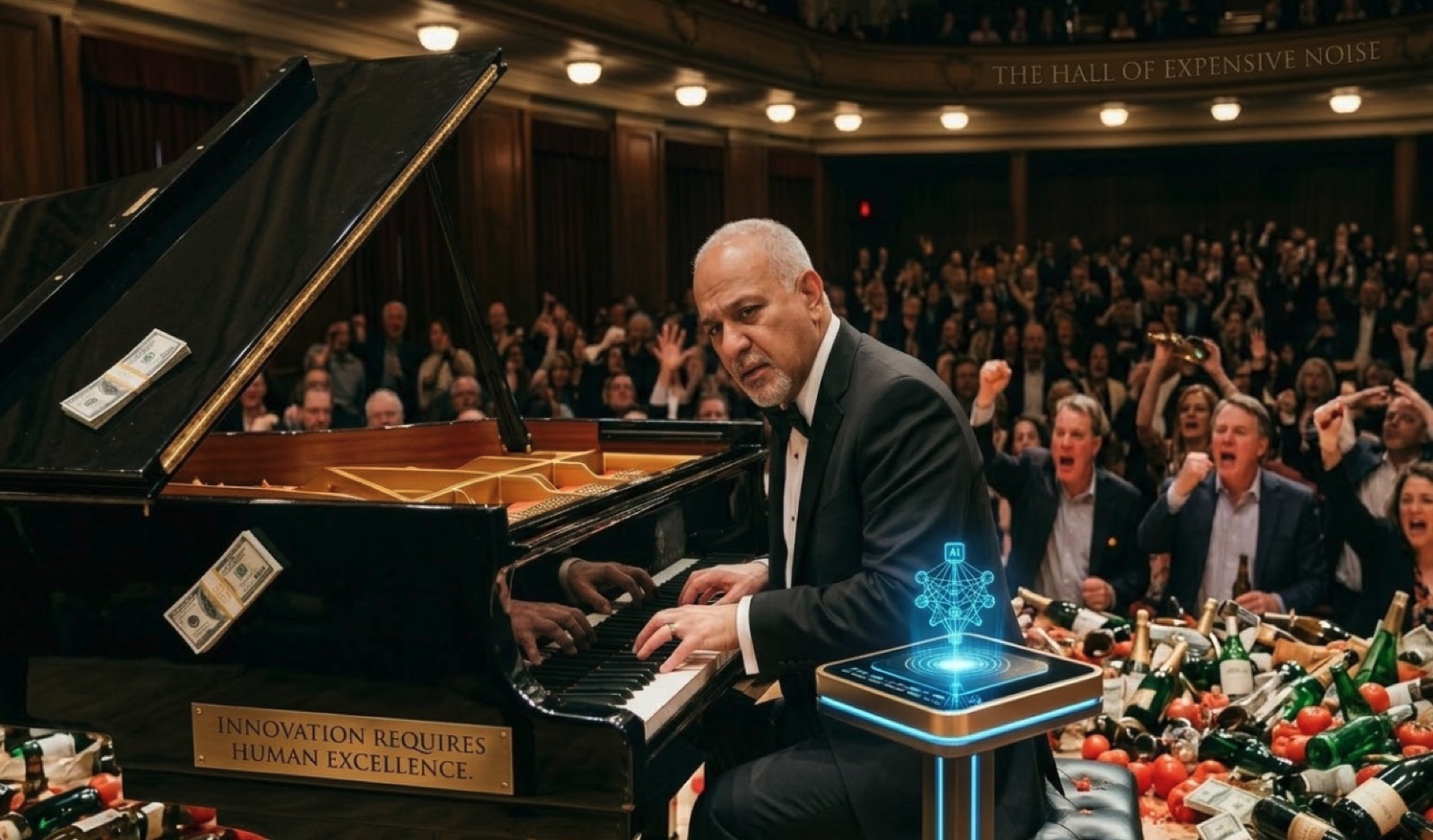
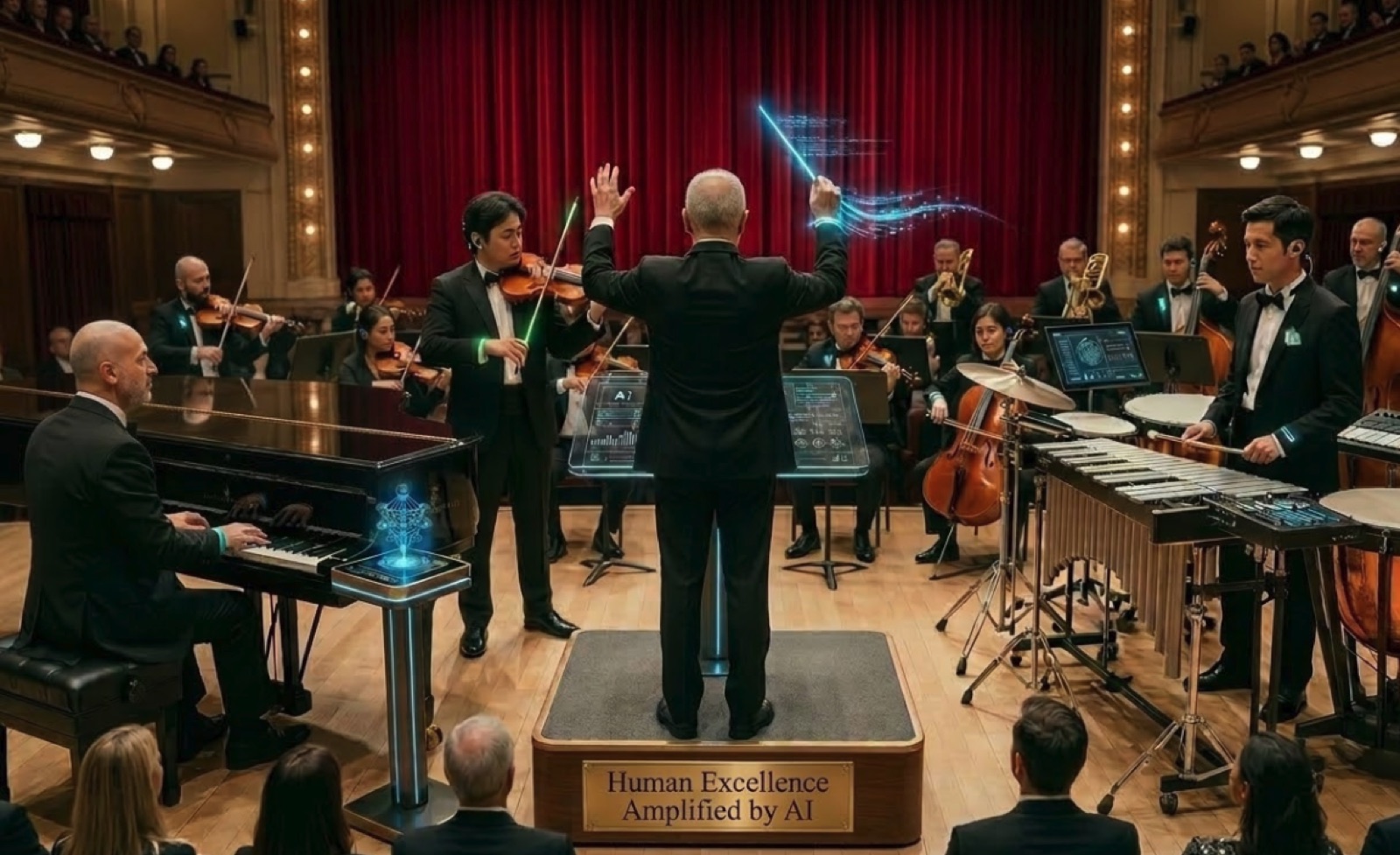
The real world is waiting for the virtuoso, the leader who knows their strengths, acknowledges their gaps, and uses the tool to conduct a symphony of real human talent.
The concert is starting. It’s time to decide if you’re there to play the music or just to push the buttons.
#HealthcareInnovation #LifeSciences #ArtificialIntelligence #DigitalTransformation #LeadershipDevelopment #TeamHuman